Cluster Flies in the UK: Why Are They Suddenly Appearing?
As summer comes to an end and temperatures begin to fall, many homes and commercial buildings across the UK can experience an increase in cluster fly activity.
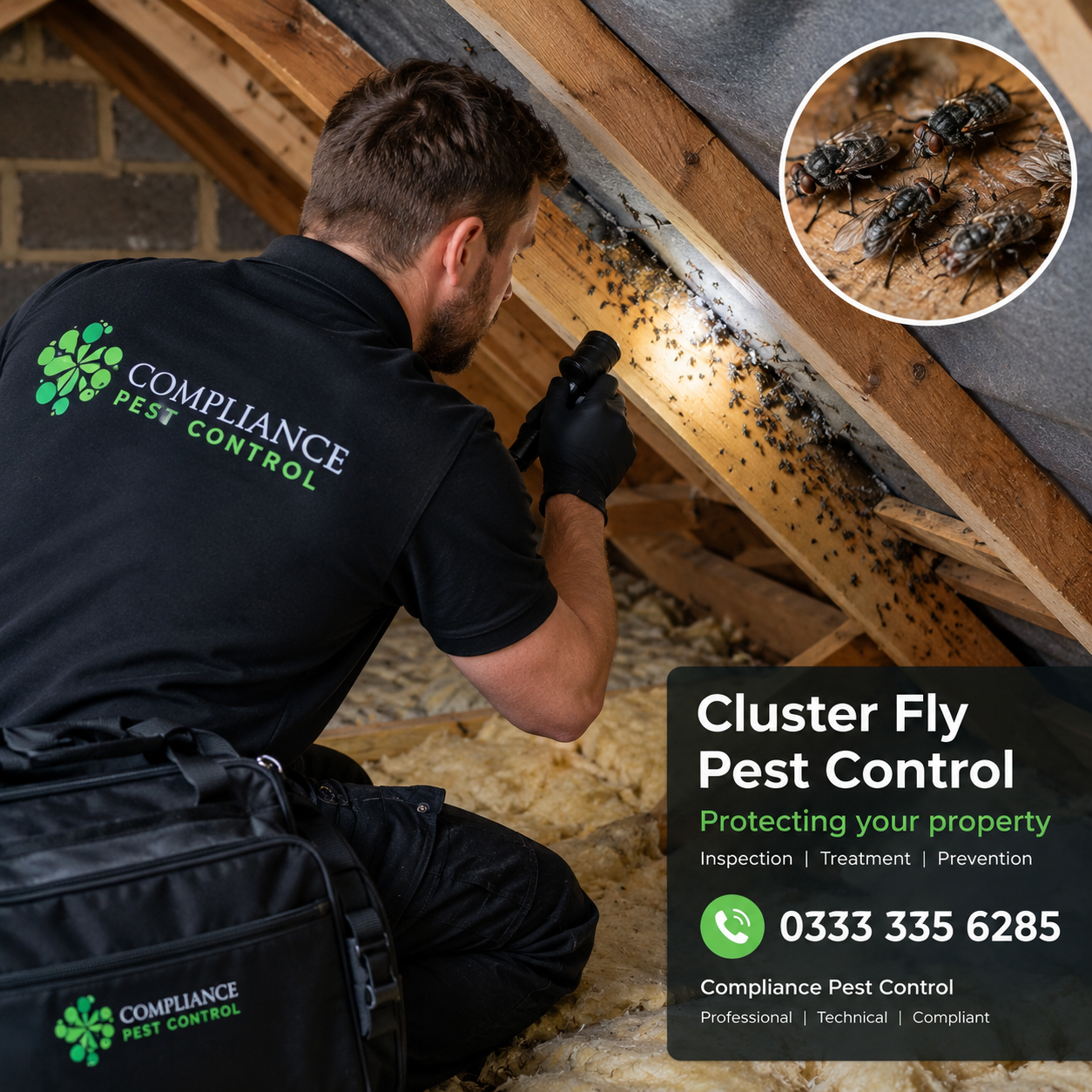
Cluster flies can appear suddenly in large numbers, particularly around windows, roof spaces, lofts and upper areas of buildings. Although they are generally considered a nuisance pest rather than a significant health risk, large numbers can be unpleasant and difficult to manage.
What Are Cluster Flies?
The common cluster fly, Pollenia rudis, is found throughout the UK, particularly in rural locations. Adult flies are typically dark in colour and can have distinctive golden hairs on the thorax, although these hairs can be difficult to see.
Unlike house flies, cluster flies don’t normally enter buildings looking for food or waste. During the warmer months they live outdoors, with their larvae developing in association with earthworms. As temperatures fall during late summer and autumn, adult flies seek dry, sheltered locations where they can overwinter.
Why Do Cluster Flies Enter Buildings?
Cluster flies can exploit very small gaps and openings around:
- Roof tiles and roof spaces
- Eaves and soffits
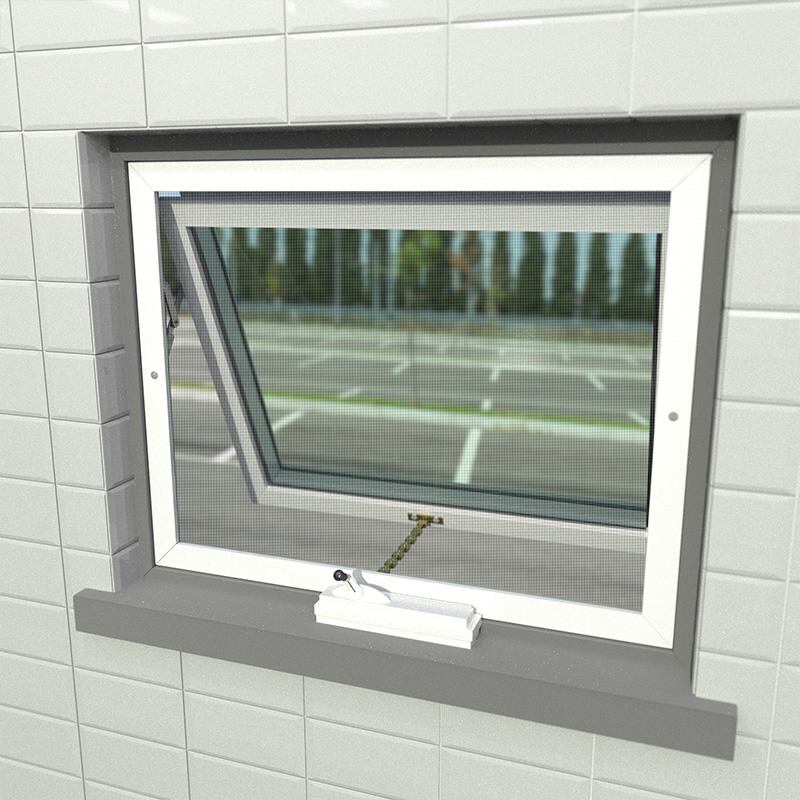
- Window frames
- Wall cavities
- Fascia and roofing areas
- Other cracks and voids within the building structure
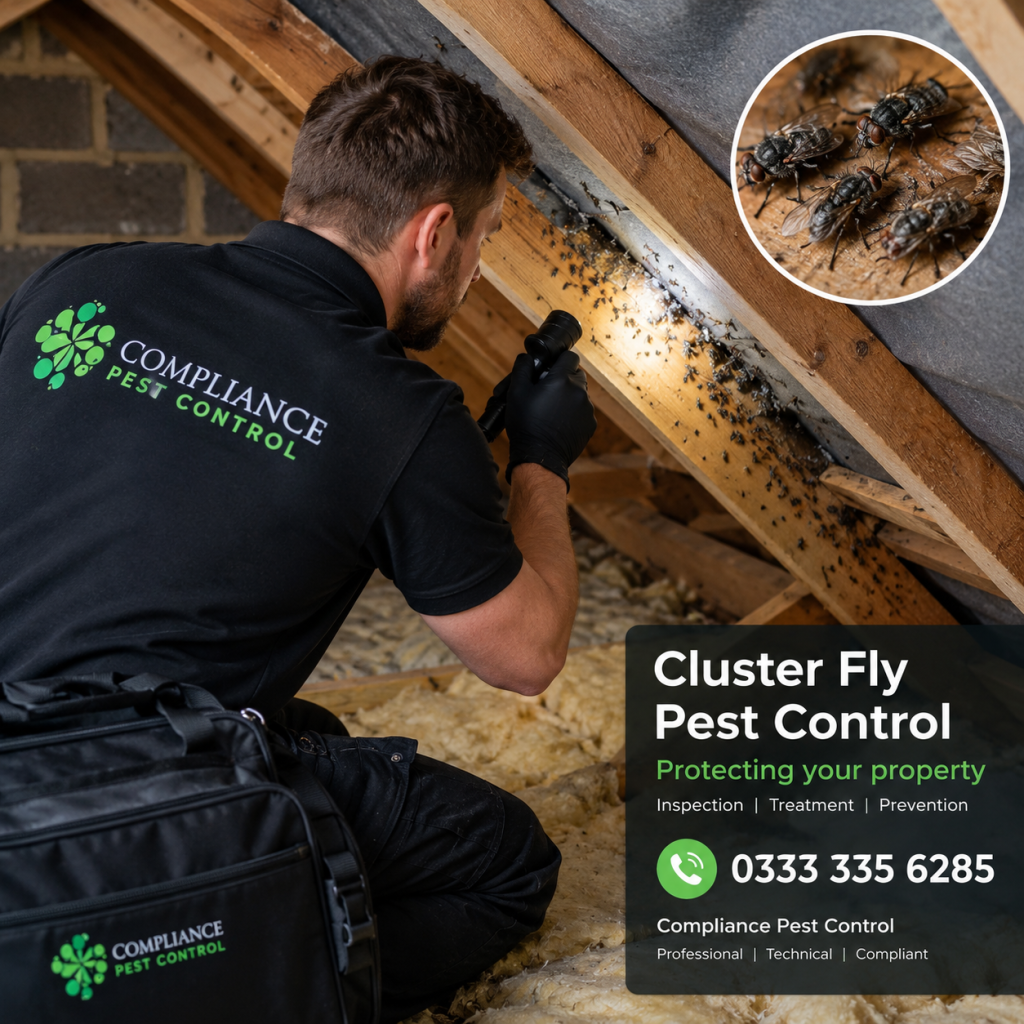
They can often be seen gathering on sunny external walls before moving into the building as temperatures drop. Once established, significant numbers may congregate within roof spaces and other sheltered areas.
Why Do They Keep Coming Back?
One of the challenges with cluster flies is that the same building can be used as an overwintering site year after year.
This means that a property experiencing cluster fly activity this autumn may experience a similar problem again in future years. Consequently, effective management should consider not only the flies currently present but also how and where they are gaining access to the building.
Are Cluster Flies Dangerous?
Cluster flies are generally regarded as a nuisance rather than a significant public health pest. They do not normally bite, sting or breed in food.
However, large numbers can still cause considerable disruption, particularly in:
- Homes
- Offices
- Hotels and accommodation
- Commercial premises
- Food manufacturing environments
- Warehouses
- Agricultural buildings
Dead flies can accumulate in roof spaces and voids, while live flies may appear around windows and internal areas during warmer periods.
How Can Cluster Flies Be Controlled?
The first step is to establish where the flies are congregating and how they are entering the building.
Depending on the circumstances, professional pest management may include:
Inspection – identifying the affected areas, potential harbourage locations and access points.
Proofing – where practical, reducing access through gaps and defects around the building.
Removal and cleaning – removing accumulated dead flies where appropriate.
Targeted treatment – where necessary, an appropriately selected professional treatment can reduce active populations within accessible areas.
It is important to remember that treatment may not completely prevent future activity if flies are able to access concealed areas of the building.
Important: Check for Bats
Before any treatment is undertaken in roof spaces or other areas where bats may be present, the area should be assessed appropriately. Bats are protected species in the UK, and insecticide treatment should not be undertaken where protected bats may be affected.
Cluster Flies in Commercial & Food Manufacturing Sites
For commercial premises, cluster fly activity should not simply be dismissed because the insects are considered a nuisance rather than a major health risk.
Large numbers of insects can affect site presentation, employee welfare, customer perception and pest management standards. In food manufacturing and other audited environments, unexplained flying insect activity should be investigated and recorded as part of the site’s wider Integrated Pest Management programme.
A professional inspection can help establish whether the activity is seasonal cluster fly activity or another species requiring a different management approach.
Seeing Cluster Flies This Autumn?
If you’re noticing large numbers of flies around windows, roof spaces, lofts or external walls, don’t wait until the problem becomes established.
Compliance Pest Control can inspect the affected areas, identify the likely cause and recommend a proportionate control strategy for your property.
Whether you are a homeowner, landlord, commercial business or food manufacturing site, our experienced pest management team can provide professional advice and treatment options.
Need Help With Cluster Flies?
Call Compliance Pest Control today for advice or to arrange an inspection.
📞 0333 335 6285
Compliance Pest Control
Professional Pest Management | Technical Expertise | Long-Term Prevention